
US Mortgage Calculator
Monthly payment breakdown
$0
/mo
Amortization for mortgage loan
Amortization is paying off debt over time in equal installments. As the term of your mortgage loan progresses, a larger share of your payment goes toward paying down the principal until the loan is paid in full at the end of your term.
Loan amount
$0
Total interest paid
$0
Total cost of loan
$0
Payoff date
-
Optional: Make extra payments
By adding extra payments, you can pay off your loan and save on interest.
Amortization schedule breakdown
This table lists how much principal and interest are paid in each scheduled mortgage payment.
Mar 2056
| Date | Principal | Interest | Remaining balance |
|---|
US Mortgage Calculator – Calculate Your Home Loan Payments Easily
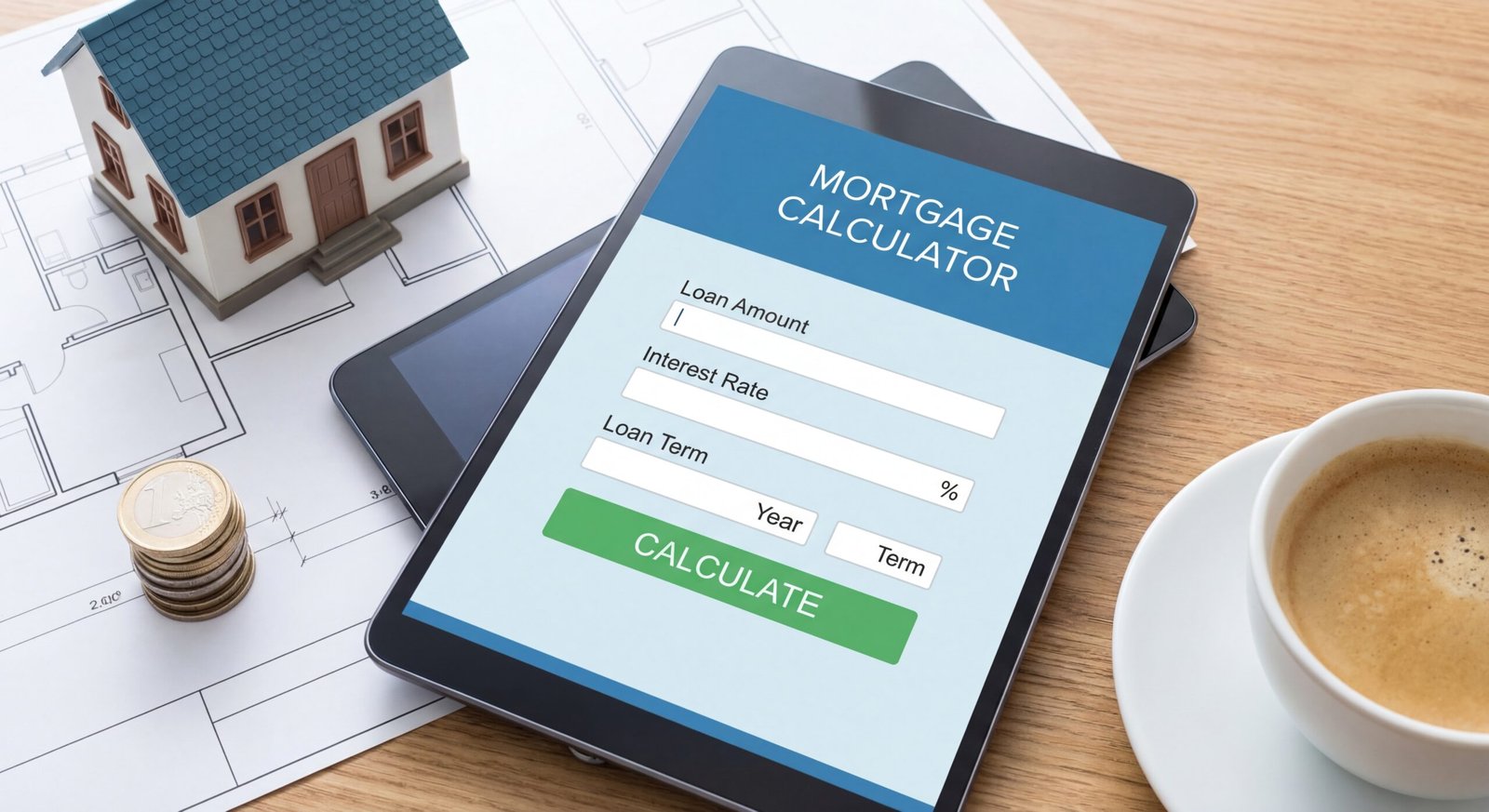
Buying a home is one of the biggest financial decisions most people ever make. Whether you're purchasing your first property or refinancing an existing loan, understanding how much your mortgage will cost every month is critical. That’s where a US Mortgage Calculator for the US becomes incredibly valuable.
Instead of manually calculating complex loan formulas, this tool allows you to input a few details—such as loan amount, interest rate, and loan term—and instantly see accurate results.
How to Use This Calculator
Using our advanced US mortgage calculator is straightforward and provides a realistic view of what you can actually afford. Follow these steps to estimate your monthly mortgage payment:
- Enter the Home Price: Input the total purchase price of the property.
- Set Your Down Payment: Enter the amount you plan to pay upfront. The calculator will automatically adjust if PMI is required.
- Provide Loan Details: Input your expected interest rate and select the loan term (e.g., 30 years or 15 years).
- Add Taxes, Insurance, & HOA: Enter the annual property tax, annual homeowner's insurance, and monthly HOA fees to get an accurate total monthly payment.
- Calculate & Analyze: Click "Calculate Mortgage" to view your Payment Breakdown donut chart.
- Plan Extra Payments: Switch to the "Amortization" tab to add optional extra monthly, yearly, or one-time payments to see exactly how much interest you can save.
When planning your home purchase, it is always a good idea to track the current interest rates set by the Federal Reserve.
What Is a US Mortgage Calculator & Why Use One?
A US mortgage calculator is an online financial tool designed to estimate the monthly payment of a home loan. Think of it like a GPS for your home-buying journey. Instead of driving blindly into a huge financial commitment, a mortgage calculator shows you the road ahead—your monthly payments, interest costs, and the total loan repayment.
Homebuyers rely on these tools because the numbers behind home loans are surprisingly complex. A mortgage typically spans 15–30 years, meaning interest compounds over hundreds of monthly payments. Without a calculator, estimating the true cost of a mortgage becomes difficult.
A good US mortgage calculator helps buyers:
- Estimate monthly payments quickly and ensure accurate, instant results.
- Compare different loan options to decide how much house they can afford.
- Understand long-term interest costs via an amortization schedule.
- Simulate financial planning scenarios (e.g., "What happens if rates increase?" or "How much interest can I save with a larger down payment?").
Are you an international buyer? Be sure to use our Forex Currency Converter to check today's exchange rates.
Understanding Your Mortgage Payment & PITI
Buying a home doesn't just involve repaying what you borrowed. Our US Mortgage calculator goes beyond the basics to help you estimate your true out-of-pocket costs.
How to Calculate Your Mortgage Payment
Your monthly mortgage payment is primarily determined by your loan amount, interest rate, and the length of the loan. The mathematical formula used to calculate your fixed-rate monthly principal and interest payment is:
Here is what each variable represents:
- $M$ = Your total monthly payment (excluding taxes and insurance).
- $P$ = The principal loan amount (Purchase price minus your down payment).
- $r$ = Your monthly interest rate (Your annual interest rate divided by 12).
- $n$ = The number of payments over the life of the loan (A 30-year term is 360 months).
Key Components of a Mortgage Payment (PITI)
In the real estate world, the total monthly cost of a home is often referred to as PITI. Here is how it breaks down:
- Principal: The amount borrowed. The portion of your payment that goes toward paying down the actual balance of the loan.
- Interest: The cost of borrowing the money. In the early years of your amortization schedule, a larger portion of your payment goes toward interest.
- Taxes: Property taxes assessed by local governments. Lenders usually collect this monthly and hold it in an escrow account to pay the annual bill on your behalf.
- Insurance: Homeowner's insurance protects your property against hazards like fire or theft.
How the US Mortgage System Works
Fixed vs Adjustable Mortgage Loans
| Mortgage Type | Description | Best For |
|---|---|---|
| Fixed Rate Mortgage | Interest rate remains the same for the entire loan term. | Long-term stability and predictable monthly payments. |
| Adjustable Rate Mortgage (ARM) | Rate changes periodically after an initial fixed period. | Short-term homeowners planning to move before the rate adjusts. |
Frequently Asked Questions (FAQ)
1. What is the best US mortgage calculator for US home buyers?
The best US mortgage calculator allows users to input the loan amount, interest rate, loan term, taxes, and insurance to estimate total monthly payments accurately while providing advanced features like an amortization schedule.
2. How much house can I afford?
A common guideline is the 28/36 rule. This means your total housing costs (mortgage, taxes, insurance) shouldn't exceed 28% of your gross monthly income, and your total debt shouldn't exceed 36% of your gross income.
3. What is PMI and how do I avoid it?
Private Mortgage Insurance (PMI) is a policy that protects the lender if you default. You are typically required to pay PMI if your down payment is less than 20% of the home's purchase price. To avoid it, save up for a 20% down payment or wait until you build up 20% equity to request its removal.